The Fat Pitch
Not every trade deserves the same size. The real jump in profitability isn't winning more often — it's putting more capital where the data justifies it, and less where it doesn't.
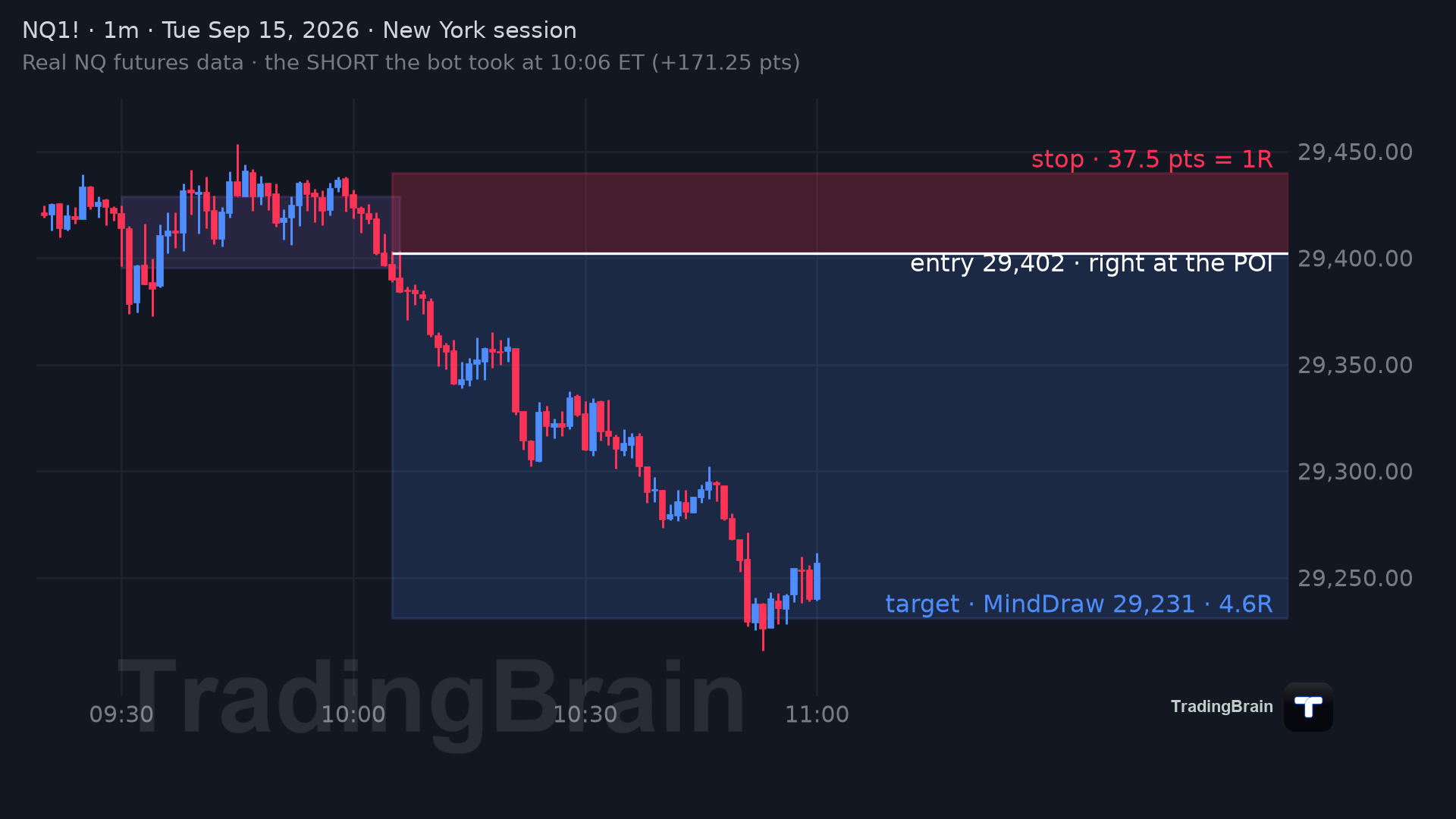
1 What a fat pitch is
The trade where all three line up:
- High grade — a genuine A+/A quality setup, not a forced B.
- Small stop — the entry sits right at the POI, so the stop is tight.
- Far target — the MindDraw is far, so the R-multiple is high.
High grade × small stop × far target = the fat pitch. The trade that deserves the press.
2 The math that proves it
With a fixed dollar risk: profit = risk × R-multiple. The size of the stop disappears from the equation — the small stop already bought you more contracts for the same risk. Only two things move the outcome: the probability (the grade) and the R (target ÷ stop).
Example: an A+ with a 30-pt stop and a 150-pt target = 5R. Per dollar risked it returns ~2.6× more than the same A+ with an 80-pt stop (1.9R). That's why you size up on fat pitches — their return per dollar is the highest on the board.
3 The guardrail (non-negotiable)
Always with fixed risk as the floor. The press never exceeds your max. This is capital efficiency, not gambling: put the money where the data justifies it — not where patience allows it.
Fixed risk is the floor; the fat pitch is where you press. High grade, tight stop, far target — that trade returns the most per dollar on the board, so it gets the size. Everything else gets the minimum.